Quantum Computing

Quantum computing is a revolution starting in problem-solving and simulation technology. It is a conceptual change in the way computation has been thought about thus far, from classical deterministic logic to systems guided by principles of quantum mechanics. Classic computing has bits assuming values of 0 or 1 in processing information. However, in quantum computing, the qubit can exist in many states simultaneously. This enables the quantum system to explore an enormous number of computation paths in parallel, whereas in a classic system, this is evaluated sequentially.
Quantum computing is not intended as a faster version of traditional computing for everyday tasks. However, it targets specific problems such as large optimization tasks, cryptographic analysis, and molecular modelling that are out of the reach of even the fastest classical supercomputers. In this light, it constitutes a fundamentally different approach to solving problems, rooted in physical laws rather than sheer logical abstraction.
Various counterintuitive physical principles mark the difference between quantum computing and classical information processing. First, there is superposition, which allows a qubit to be in a mixture of basis states, with the additional power of computing all possibilities simultaneously. A qubit can mathematically be represented as ∣ψ⟩ = α∣0⟩ + β∣1⟩, where α and β are probability amplitudes. Correct solutions emerge through interference, where the incorrect paths cancel out, and the correct ones amplify. Entanglement introduces non-classical correlations between qubits, interdependent states even across large distances.
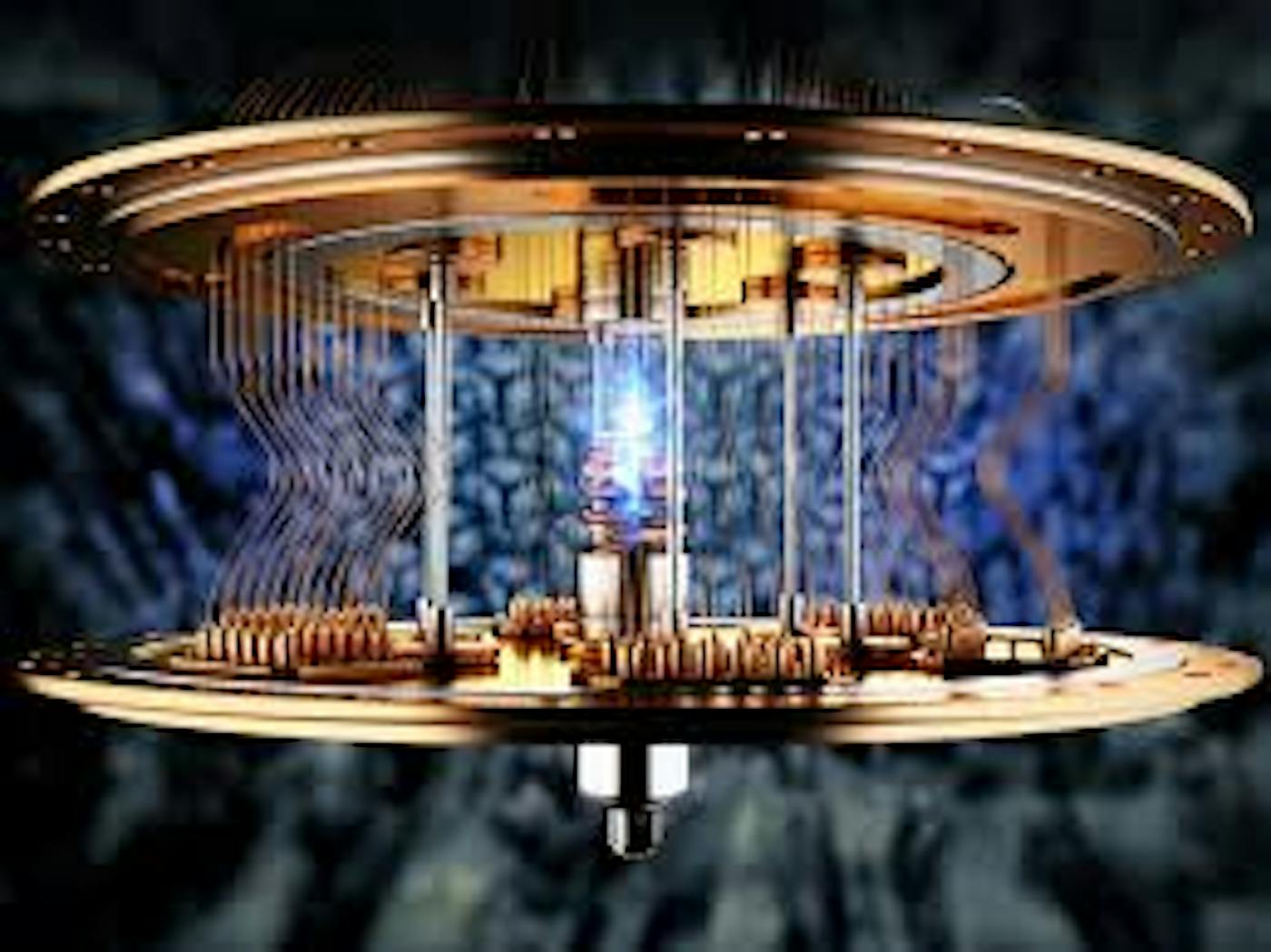
Several challenges are imposed on hardware and engineering by the attempt to build a quantum computer. Qubits must be realized in physical systems such as superconducting circuits, trapped ions, neutral atoms, or photons-all of these require trade-offs between coherence time, gate speed, scalability, and complexity. Most current systems require cryogenic temperatures, ultra-high vacuum, and tightly controlled electromagnetic conditions.
Quantum algorithms bring together the idea of theory and application. Quantum algorithms, like Shor’s for factorization, Grover’s for search, show the power of the technology. Moving forward, quantum computing brings up ethical, social, and geopolitical considerations alongside technology-related considerations. The potential for technological inequality if quantum technology is concentrated has to be factored in. The ecological and economic viability of quantum computing are of interest. In conclusion, quantum computing development will not only hinge upon technological advances but upon good governance and transparency.